
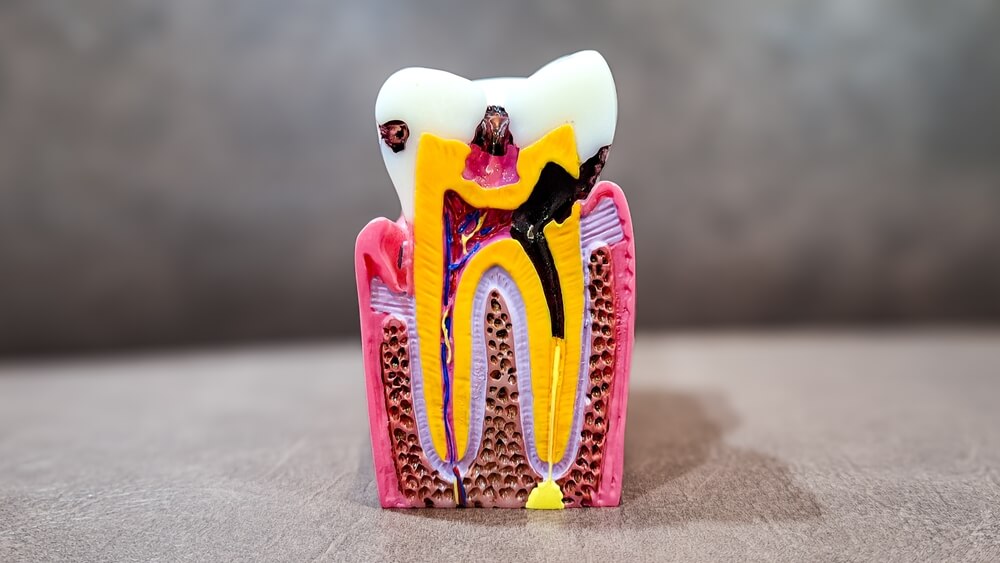
Root canal treatment removes infected or damaged tissue from inside a tooth, seals the space to prevent reinfection, and restores the tooth so it can function normally. It is the standard treatment when decay or trauma has reached the inner pulp of the tooth, where the nerve and blood vessels are located.
Root canals have an undeserved reputation for being painful. In practice, the procedure is performed under local anesthesia and most patients find it no more uncomfortable than receiving a filling. What causes pain is the infection itself. The root canal relieves that pain by removing the source. If you’re in severe pain right now, don’t wait treat it as a dental emergency and call us for a same-day appointment. We provide this care for patients from Ashland, Framingham, Natick, Hopkinton, and across MetroWest.
What the Procedure Involves
The tooth is numbed with local anesthesia. Dr. Almaawi creates a small opening in the crown of the tooth to access the pulp chamber. The infected or damaged pulp tissue is carefully removed, and the internal canals are cleaned, shaped, and disinfected. The canals are then filled with a biocompatible material and sealed. In most cases, a crown is placed over the tooth at a subsequent appointment to restore its strength and protect it from fracture. Our in-house CEREC system can mill and place that crown the same day in straightforward cases.
Frequently Asked Questions
Is a root canal painful?
The procedure is performed under local anesthesia and is not painful. Post-procedure soreness is normal for a few days and is typically managed with over-the-counter pain relief. Most patients notice significant improvement once the infected tissue is removed.
How long does it take?
Most root canal treatments are completed in one to two appointments of approximately 60 to 90 minutes each. The number of appointments depends on the tooth location, the number of canals, and whether infection was present at the time of the first visit.
Can I avoid a root canal?
Once the pulp of a tooth is infected or significantly damaged, a root canal is typically the only way to save the tooth. The alternative is extraction. Regular checkups can identify decay or cracks before they reach the pulp, potentially avoiding the need for root canal treatment altogether.
If you are experiencing dental pain, have been told you need a root canal, or want to understand your options, call 508-881-7700. Same-day appointments are available for patients in pain.