
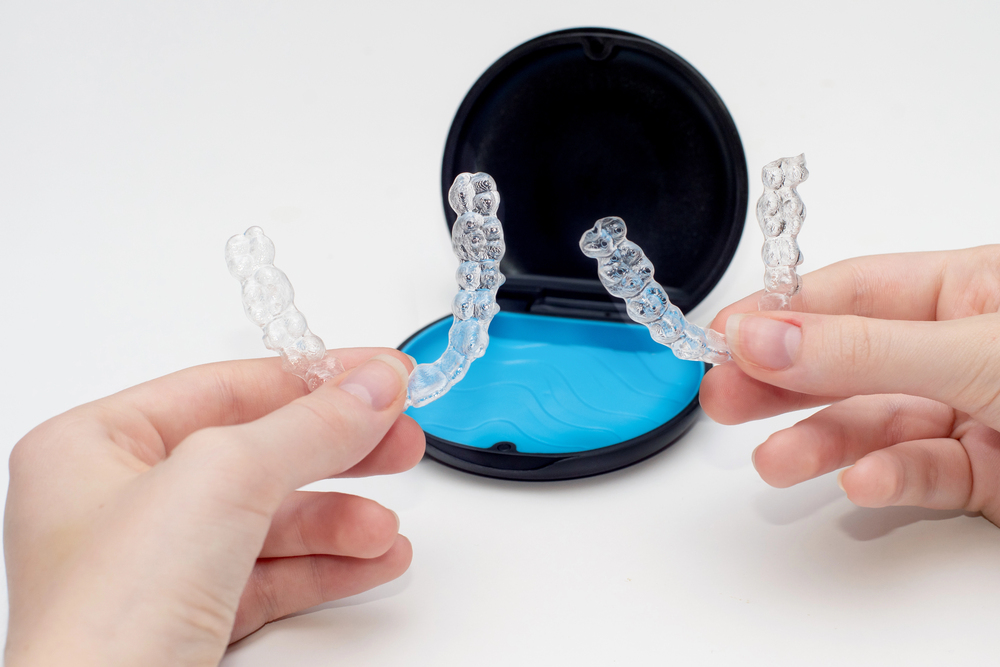
Invisalign results in Ashland, MA develop gradually as each aligner applies controlled pressure to guide the teeth toward their planned positions. Some patients notice subtle changes early in treatment, while others see more visible improvements after several aligner stages. The timing and extent of these changes depend on the patient’s starting alignment, treatment complexity, and consistency with prescribed wear.
At Ashland Family & Implant Dentistry, Dr. Ali Almaawi, DDS, FICOI, provides personalized clear-aligner treatment for patients in Ashland and nearby MetroWest communities.
To learn what Invisalign may be able to change in your smile, call 508-881-7700 or request an Invisalign consultation in Ashland, MA.
How Invisalign Gradually Changes Your Smile
Invisalign treatment uses a sequence of custom removable aligners. Each tray is designed to make small, planned adjustments before the patient advances to the next stage.
Depending on the treatment plan, clear aligners may be used to improve:
- Crowded or overlapping teeth
- Spaces between teeth
- Teeth that appear rotated or uneven
- Certain bite relationships
- The overall balance and alignment of the smile
The results shown in a digital treatment simulation represent the planned direction of treatment. They should not be interpreted as a guarantee that every tooth will move exactly as projected or that every patient will achieve the same outcome.
When Will You Start Seeing Invisalign Results?
There is no universal point at which every patient begins noticing visible changes. Some people see subtle differences during the early stages, while others notice more substantial changes later in treatment.
The First Few Days
The first few days are usually focused on adjusting to the aligners rather than seeing visible changes. The trays may feel snug, and mild pressure or tenderness can occur as the teeth begin responding.
Speech may also feel slightly different at first. These adjustments often become easier as the patient becomes accustomed to wearing and removing the trays.
The First Several Weeks
During the early aligner stages, tooth movement may be too subtle to notice from day to day. Comparing progress photos taken several weeks apart may make changes easier to recognize.
Patients should not become discouraged when visible changes are limited early in treatment. Some movements may be designed to create space or prepare the bite before the most noticeable cosmetic changes occur.
One to Three Months
Some patients begin noticing clearer changes after progressing through several sets of aligners. Crowded areas may appear less overlapped, small gaps may begin closing, or the front teeth may look more even.
The amount of visible improvement during this stage varies considerably. Case complexity, the planned sequence of movements, and daily wear all influence progress.
Midway Through Treatment
By the middle of treatment, alignment changes may become easier to recognize. Patients may notice improvements when smiling, brushing, flossing, or comparing their current appearance with earlier photos.
Changes in the way the teeth meet may also become more noticeable. Because bite adjustments can temporarily feel unfamiliar, regular progress appointments remain important.
The Final Stages
The final aligners focus on completing the planned tooth movements and refining the overall result. Small spacing, rotation, or bite details may still require attention even when the smile already appears significantly straighter.
Some patients need additional aligners after the initial series. These are commonly referred to as refinements and allow the treatment plan to address remaining movements.
What Changes May Be Noticeable During Treatment?
Reduced Crowding
Overlapping teeth may gradually become more separated and aligned. The sequence may include creating space before individual teeth appear noticeably straighter.
Gaps Beginning to Close
Spaces between teeth may become smaller as the aligners guide the teeth toward their planned positions. The rate of closure depends on the size and location of the gaps.
Straighter Front Teeth
Changes in the front teeth may be among the first improvements patients notice when looking in the mirror or comparing photographs. However, visible front-tooth movement may occur later when other adjustments need to happen first.
Changes in Your Bite
As teeth move, the way the upper and lower teeth meet may temporarily feel different. Some bite changes are expected during active treatment, but persistent discomfort or an unexpected change should be discussed with the dental office.
Easier Brushing and Flossing
As crowded teeth become better aligned, some patients find it easier to reach certain surfaces with a toothbrush and floss. Good oral hygiene remains essential throughout treatment because plaque can become trapped beneath aligners.
If your trays are no longer fitting properly, an attachment has come loose, or your progress seems different from the treatment plan, call 508-881-7700 before changing your aligner schedule.
What Determines How Quickly Invisalign Works?
The overall timeline depends on several factors, including:
- The amount and type of tooth movement required
- The complexity of crowding, spacing, or bite concerns
- How consistently the aligners are worn
- Whether aligners continue fitting as planned
- The biological response of the teeth and supporting tissues
- Whether attachments or other treatment features are needed
- Whether refinements are required
- Attendance at scheduled progress appointments
A projected treatment timeline is an estimate based on the initial plan. It may change if teeth move differently than expected, trays are not worn as directed, aligners are lost or damaged, or additional corrections are needed.
Why Daily Wear Time Matters
Patients are generally instructed to wear Invisalign aligners for approximately 20 to 22 hours each day. The trays should normally be removed only for eating, drinking beverages other than plain water, brushing, flossing, and cleaning the aligners.
Leaving the trays out for extended periods may interfere with tooth movement and make the next aligner more difficult to seat. Patients should follow the individual wear schedule provided by Dr. Almaawi rather than changing it independently.
For detailed cleaning, storage, and daily-wear guidance, review these Invisalign aligner care instructions for Ashland patients.
What Are Invisalign Attachments?
Attachments are small shapes placed on selected teeth to help the aligners apply force more effectively. Their number, size, and location depend on the movements included in the treatment plan.
Attachments may make an aligner feel more secure and can require additional care when removing or reinserting trays. Contact the office when an attachment becomes loose or falls off. Do not attempt to replace it at home.
What Happens During Invisalign Progress Appointments?
Progress visits allow Dr. Almaawi to evaluate whether the teeth are moving as planned and whether the aligners are fitting correctly. The appointment may include:
- Checking how the current aligners fit
- Comparing progress with the treatment plan
- Evaluating tooth and gum health
- Inspecting attachments
- Reviewing daily wear and tray-change timing
- Providing additional sets of aligners
- Determining whether adjustments or new digital records are needed
Patients should bring their current aligners and any other trays requested by the dental team.
What Are Invisalign Refinements?
Refinements are additional aligners created when further tooth movement is needed after the initial series. They do not necessarily mean treatment has failed. Teeth do not always respond identically to a digital projection, and small adjustments may be needed to improve the final alignment or bite.
Creating refinement trays may require updated scans or other records. Patients should continue wearing the aligner recommended by the dental team while the next stage is being planned.
Signs Your Invisalign Treatment Is Tracking Properly
Common signs that treatment may be progressing as expected include:
- The aligner seats closely around the teeth
- Large gaps are not developing between the tray and tooth surfaces
- Each new tray can be inserted according to schedule
- Attachments remain in place
- Pressure from a new tray gradually becomes less noticeable
- Progress appointments confirm the planned movement
A snug feeling with a new tray can be normal. Sharp pain, significant gum irritation, or an aligner that cannot be seated should be reported.
What to Do If You Are Not Seeing Expected Changes
Do not skip ahead, return to an older tray, extend wear, or change your schedule without speaking with the dental office. Visible results do not always reflect all the movements occurring during a particular stage.
Contact Ashland Family & Implant Dentistry when:
- A tray no longer fits securely
- A noticeable gap develops between the aligner and a tooth
- An attachment becomes loose or falls off
- An aligner is lost, cracked, or warped
- You cannot advance to the next prescribed tray
- You experience unusual or persistent pain
- You have missed a significant amount of wear time
What Happens After the Final Aligner?
Completing the last planned aligner does not always mean active treatment is finished. Dr. Almaawi will evaluate the alignment, bite, and overall result before determining the next step.
The final stage may involve:
- Confirming that the planned movements are complete
- Taking updated photographs or digital scans
- Discussing refinements when additional changes are needed
- Removing attachments when appropriate
- Creating or providing retainers
- Reviewing long-term retention instructions
Why Retainers Are Necessary After Invisalign
Teeth can shift after orthodontic treatment. Retainers help maintain the new positions while the surrounding tissues adapt.
The recommended retainer schedule varies by patient. Some people may initially be instructed to wear retainers for most of the day before transitioning to nighttime wear. Follow the specific schedule provided by Dr. Almaawi.
Contact the office if a retainer is lost, damaged, or becomes too tight. Delaying replacement may allow unwanted movement to occur.
Why Choose Ashland Family & Implant Dentistry for Invisalign?
- Personalized clear-aligner treatment planning
- Digital technology for evaluation and monitoring
- Ongoing progress appointments
- Guidance for aligner wear, cleaning, and maintenance
- Comprehensive dental care in one office
- A convenient Ashland location serving MetroWest communities
Patients interested in improving the appearance and alignment of their smiles can explore available cosmetic dentistry options in Ashland, MA.
You can also view Ashland Family & Implant Dentistry on Google Maps and get directions.
Frequently Asked Questions About Invisalign Results
How soon will I see Invisalign results?
Some patients notice subtle changes during the early stages, while others see more visible improvement after several aligner sets. Timing depends on the treatment plan and the movements being completed.
How long does Invisalign treatment take?
Treatment time varies according to the complexity of the case, the number of planned movements, daily wear, and whether refinements are needed. A personalized estimate can be provided after an evaluation.
Is Invisalign treatment painful?
Mild pressure or tenderness can occur when beginning a new tray. Contact the office if discomfort is severe, persistent, or accompanied by an aligner that does not fit correctly.
Why are my aligners not fitting tightly around one tooth?
A visible gap may indicate that the tooth is not tracking as planned or that the tray is not fully seated. Contact the dental office for guidance rather than forcing the aligner or switching trays independently.
Will I need additional Invisalign aligners?
Some patients need refinement aligners to complete additional movements after the initial series. The need for refinements is determined after evaluating treatment progress.
Do I need to wear retainers after Invisalign?
Yes. Retainers help reduce unwanted tooth movement after active treatment. Follow the individualized retention schedule provided by the dental team.
Are Invisalign results permanent?
Teeth can shift after treatment, especially when retainers are not worn as directed. Long-term retention and regular dental visits are important for maintaining the result.
Schedule an Invisalign Consultation in Ashland, MA
Invisalign results occur gradually, and every patient’s timeline is different. A personalized evaluation can help determine which changes may be possible, how long treatment may take, and what will be required to maintain the final result.
Call 508-881-7700 to speak with Ashland Family & Implant Dentistry or request a clear-aligner consultation online.
- Call Ashland Family & Implant Dentistry at 508-881-7700
- Explore cosmetic dentistry and clear-aligner options
- Learn how to clean, wear, and maintain Invisalign aligners
- Get directions to Ashland Family & Implant Dentistry on Google Maps
This article provides general educational information and does not guarantee a particular treatment timeline or outcome. Invisalign suitability, tooth movement, treatment duration, refinement needs, and final results vary by patient.