
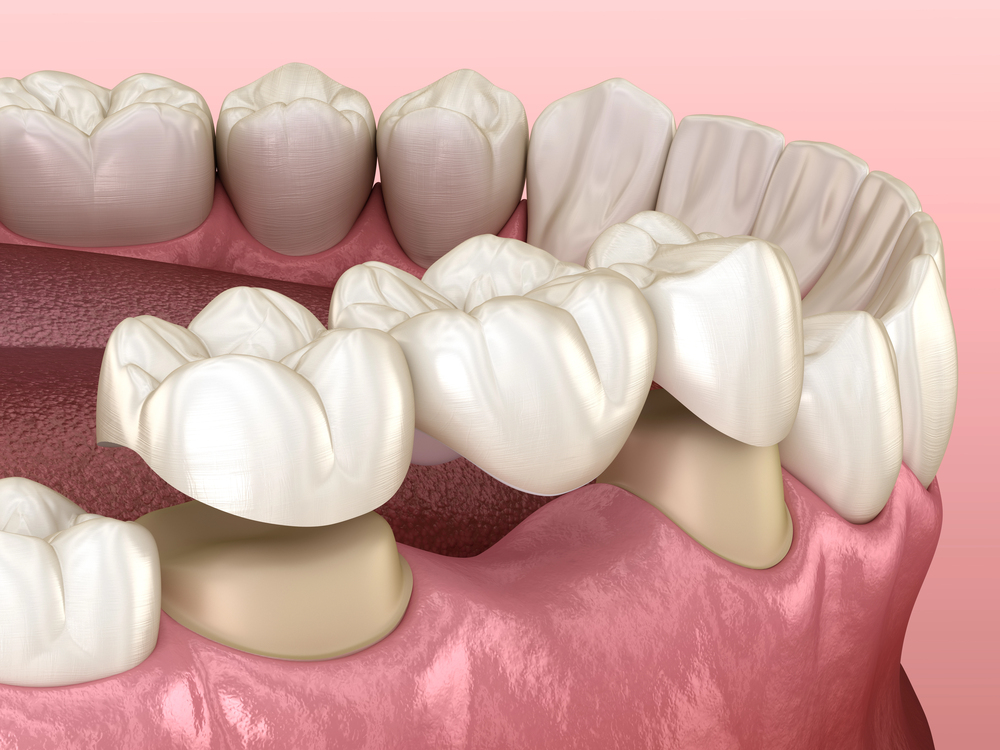
When you lose a tooth because of decay, injury, gum disease, or extraction, the empty space can affect more than your smile. Nearby teeth may begin to drift, your bite can change, and chewing may become less comfortable. If you are looking for a fixed tooth replacement option that restores appearance and function without removable dentures, a dental bridge in Ashland, MA may be a good solution to consider.
At Ashland Family and Implant Dentistry, Dr. Ali Almaawi, DDS, FICOI and our team help patients understand their tooth replacement options clearly. A bridge is not the right choice for every patient, but it can be an excellent option when the surrounding teeth are healthy enough to support the restoration and the patient wants a natural-looking, fixed result.
This guide explains what dental bridges are, how they work, when they may be recommended, how they compare with implants and dentures, and what to expect during treatment.
What Is a Dental Bridge?
A dental bridge is a custom-made restoration that fills the gap left by one or more missing teeth. The replacement tooth is called a pontic, and it is held in place by supporting teeth, crowns, or dental implants. In many traditional cases, crowns are placed on the teeth on each side of the gap, and the artificial tooth is connected between them.
Unlike a removable partial denture, a fixed dental bridge stays in place and can only be removed by a dentist. The goal is to restore your ability to chew, speak, and smile while helping prevent nearby teeth from shifting into the open space.
How a Dental Bridge Works
Before recommending a bridge, Dr. Almaawi will examine your teeth, gums, bite, bone support, and the condition of the teeth near the missing space. This helps determine whether a bridge is appropriate or whether another option, such as a dental implant or partial denture, may be a better fit.
The dental bridge process often includes:
- Consultation and examination: Your dentist evaluates the missing tooth area, surrounding teeth, gum health, bite, and long-term goals.
- Digital imaging or impressions: Diagnostic images and impressions or scans may be used to plan the bridge and design a restoration that fits your mouth.
- Tooth preparation: For a traditional bridge, the supporting teeth are reshaped so crowns can fit over them securely.
- Temporary restoration: A temporary bridge may be placed while the final bridge is being made.
- Final placement: Once the bridge is ready, your dentist checks the fit, bite, color, and comfort before securing it in place.
Every case is different. Some bridge cases are straightforward, while others require gum treatment, tooth repair, bite adjustments, or other restorative planning before the final bridge can be placed.
Types of Dental Bridges
There are several types of dental bridges. The right choice depends on the location of the missing tooth, the condition of the surrounding teeth, your bite, your gum health, and your preferences.
- Traditional dental bridge: The most common type. It uses crowns on the teeth on both sides of the gap to support the replacement tooth.
- Cantilever bridge: A bridge supported on only one side. This is used less often and only in carefully selected situations.
- Maryland bonded bridge: A more conservative option in some front-tooth cases. It uses wings bonded behind nearby teeth rather than full crowns.
- Implant-supported bridge: A bridge supported by dental implants instead of natural teeth. This may be recommended when several teeth are missing in a row.
Benefits of Dental Bridges
A well-planned dental bridge can improve both oral function and confidence. For many patients, the biggest benefits include:
- Restoring the appearance of a complete smile
- Improving chewing comfort and bite function
- Helping nearby teeth stay in better alignment
- Supporting clearer speech when missing teeth affect pronunciation
- Providing a fixed option that does not need to be removed at night
- Offering a non-surgical alternative when dental implants are not preferred or not appropriate
Dental Bridge vs. Dental Implant vs. Partial Denture
Dental bridges, implants, and partial dentures can all replace missing teeth, but they work differently. A bridge is fixed in place and is often completed faster than implant treatment, but a traditional bridge usually requires reshaping the teeth next to the gap. A dental implant replaces the missing tooth root and does not rely on neighboring teeth, but it requires surgery, healing time, and enough healthy bone. A partial denture is removable and may cost less upfront, but some patients prefer the stability of a fixed restoration.
During your visit, Dr. Almaawi can explain which options fit your oral health, timeline, budget, and long-term goals. If you are comparing bridges with implant treatment, our team can also discuss whether restorative dentistry or implant-supported tooth replacement may be appropriate for your case.
When a Dental Bridge May Not Be the Best Option
A dental bridge can be a strong solution, but it is not ideal for every patient. A bridge may not be recommended if the surrounding teeth are not strong enough to support it, if gum disease is active, if there is not enough healthy tooth structure, or if an implant would better protect adjacent teeth. Patients who have difficulty cleaning around dental work may also need additional hygiene support before moving forward.
This is why a consultation is important. The goal is not simply to fill a space, but to choose a replacement option that supports your long-term oral health.
How Much Does a Dental Bridge Cost?
The cost of a dental bridge depends on several factors, including the number of missing teeth, the type of bridge, the materials used, whether supporting teeth need treatment first, and whether dental insurance contributes to the procedure. Some patients also need gum therapy, fillings, crowns, or extractions before a bridge can be completed.
At your consultation, our team will review your treatment options and explain estimated costs before care begins. If you have insurance, we can help you understand your benefits and expected out-of-pocket costs.
How to Care for a Dental Bridge
Dental bridges need consistent home care and routine dental visits. Although the artificial tooth cannot get a cavity, the supporting teeth and gums still need protection. Good bridge care helps reduce the risk of decay around the bridge margins, gum inflammation, bad breath, and bridge failure.
- Brush twice daily with a fluoride toothpaste.
- Clean under the bridge using floss threaders, super floss, or tools recommended by your dental hygienist.
- Keep regular dental cleanings and exams so your dentist can monitor the bridge and supporting teeth.
- Avoid chewing hard objects such as ice, pens, or hard candy.
- Call the office if your bridge feels loose, painful, high in the bite, or difficult to clean.
Dental Bridges in Ashland, MA and Nearby Communities
Ashland Family and Implant Dentistry provides dental bridges for patients in Ashland and nearby MetroWest communities. If you are looking for a dentist near Hopkinton, MA, our Ashland office offers restorative consultations, digital imaging, treatment planning, and personalized tooth replacement guidance close to home.
Our team focuses on clear communication and practical recommendations. We will explain what we see, what your options are, and which treatment may best support your smile, comfort, and long-term oral health.
Schedule a Dental Bridge Consultation in Ashland
If you have one or more missing teeth, a dental bridge may help restore your smile and make everyday chewing more comfortable. The best way to know whether a bridge is right for you is to schedule an exam and consultation with Dr. Almaawi.
To get started, book an appointment online or call 508-881-7700. You can also view our Google Business Profile for directions, office details, and patient reviews.
Frequently Asked Questions About Dental Bridges in Ashland, MA
How long do dental bridges last?
Dental bridge lifespan varies based on the material, bite forces, oral hygiene, supporting teeth, and regular dental care. Many bridges last several years, and some last longer with excellent home care and routine professional maintenance.
Is a dental bridge painful?
The procedure is usually performed with local anesthetic, so the prepared area should be numb during treatment. Some temporary sensitivity or soreness can happen after tooth preparation, but persistent pain should be evaluated by your dentist.
Can I eat normally with a dental bridge?
Once your final bridge is adjusted and comfortable, it should help improve chewing function. You may need a short adjustment period, and your dentist may recommend avoiding very hard or sticky foods that could damage the bridge.
Do dental bridges look natural?
Yes, dental bridges are designed to match the color, shape, and size of nearby teeth. The final appearance depends on the material used, the location of the missing tooth, and the surrounding smile design.
Can I get a bridge if I have gum disease?
Active gum disease should usually be treated before placing a bridge. Healthy gums and stable supporting teeth are important because the bridge depends on the surrounding structures for long-term success.
Is a bridge better than a dental implant?
Neither option is best for everyone. A bridge may be better when you want a fixed, non-surgical option or when nearby teeth already need crowns. An implant may be better when you want to avoid reshaping healthy neighboring teeth and have enough bone for implant placement.