
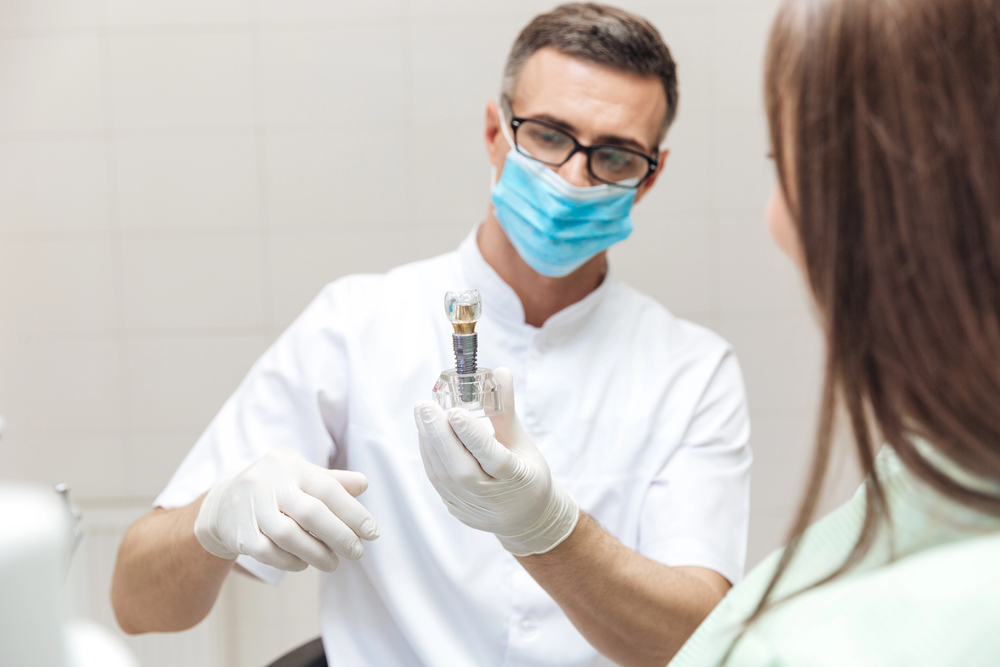
Recovery after a single-tooth implant happens in stages. Soreness, swelling, and visible gum healing usually improve well before the implant has fully integrated with the jawbone. Many patients begin feeling more comfortable within several days, while osseointegration and preparation for the final crown may take several months.
Your exact timeline depends on the implant location, bone quality, whether an extraction or bone graft is needed, your medical history, tobacco use, and how your body heals. At Ashland Family & Implant Dentistry, Dr. Ali Almaawi, DDS, FICOI evaluates these factors and provides instructions based on your individual procedure.
Considering an implant to replace one missing tooth? Explore the practice’s implant dentistry options, or call Ashland Family & Implant Dentistry at 508-881-7700 to request an evaluation.
What Is the Difference Between Recovery and Complete Implant Healing?
Initial recovery refers to the period when swelling, tenderness, minor bleeding, and activity limitations improve after implant placement. This phase is usually much shorter than the complete treatment process.
Complete healing includes osseointegration, the process through which the surrounding bone stabilizes the implant. You may feel back to normal while this process is still continuing beneath the gum. The final crown is generally placed only after Dr. Almaawi confirms that the implant is ready to support it.
A General Single-Tooth Implant Recovery Timeline
| Recovery stage | What may be happening | What patients should remember |
|---|---|---|
| First 24 hours | Mild bleeding, soreness, swelling, and tenderness may occur | Rest and follow the procedure-specific instructions provided by the dental team |
| Days two through three | Swelling may become more noticeable before it begins improving | Continue recommended diet, hygiene, medication, and activity precautions |
| End of week one | Discomfort and swelling often begin decreasing | Do not assume the implant is ready for normal chewing pressure |
| Weeks two through four | Gum tissue continues healing, and many patients feel largely back to normal | Attend follow-up visits and continue protecting the implant site |
| Following months | The jawbone continues integrating with the implant | Healing may continue even when there is no discomfort |
| Final restoration stage | The implant is evaluated for an abutment and crown | Timing depends on implant stability, tissue healing, and the treatment plan |
This timeline is a general overview rather than a guarantee. An extraction, infection, bone graft, medical condition, or other clinical factor can make treatment shorter or longer.
What Can You Expect During the First 24 Hours?
The first day is focused on protecting the surgical site and managing normal postoperative symptoms. Mild oozing, tenderness, swelling, and fatigue may occur. Dr. Almaawi will provide instructions for gauze, prescribed or recommended medication, oral hygiene, eating, and activity.
Plan to rest and avoid strenuous activity. When sedation is used, arrange for a responsible adult to drive you home and follow all eating, drinking, and supervision instructions provided by the practice.
Choose soft foods that require minimal chewing and are not excessively hot. The exact recommendations may differ depending on where the implant was placed and whether another procedure was completed at the same visit.
What Happens During Days Two Through Seven?
Swelling may become more noticeable during the early part of this period before gradually improving. Tenderness should generally become easier to manage rather than progressively worse.
Continue following the dental team’s instructions for brushing, rinsing, food choices, and activity. Avoid aggressive cleaning directly over the surgical site unless you have been told otherwise. Do not test the implant by chewing hard foods on it simply because discomfort has decreased.
Some patients can resume desk-based work relatively soon, while others need additional time. Your return to work should be based on your symptoms, the type of work you perform, the use of sedation, and Dr. Almaawi’s recommendations.
What Should You Expect During Weeks Two Through Four?
By this stage, the gum tissue usually continues to settle, and many patients feel mostly recovered from the surgical procedure. However, the implant may still be integrating with the jawbone and may not be ready for full chewing forces.
Follow-up appointments allow Dr. Almaawi to evaluate the tissues, check for signs of complications, and confirm whether your recovery is progressing as expected. Continue any restrictions or cleaning instructions until the practice advises you to change them.
Why Can Osseointegration Take Several Months?
Osseointegration is the biological process that stabilizes the implant within the jawbone. This process continues after swelling and soreness have resolved, which is why feeling comfortable does not mean the implant is fully healed.
The healing period can be affected by:
- The density and amount of bone at the implant site
- The location of the missing tooth
- Whether a tooth was extracted during the same treatment period
- Whether bone grafting was required
- The presence of infection or gum disease
- Medical conditions and medications that affect healing
- Smoking or vaping
- Premature pressure on the implant
- Teeth grinding or clenching
- Your individual healing response
For a broader explanation of the treatment stages, read why the complete implant process may take several months.
Your recovery and final restoration timeline should be based on an examination rather than a general online estimate. Request a personalized implant consultation, or call 508-881-7700 to speak with the Ashland dental team.
How Can You Prepare Before Implant Surgery?
- Provide a complete medical history and current medication list.
- Ask whether any medications require instructions from your dentist or medical provider.
- Follow all eating and drinking directions related to anesthesia or sedation.
- Arrange transportation and supervision when required.
- Prepare soft foods and drinks before the procedure.
- Obtain recommended medications and supplies in advance.
- Plan time away from strenuous employment, exercise, and household tasks.
- Ask whether a temporary tooth will be available during healing.
- Avoid tobacco and follow any cessation guidance provided by your dental and medical professionals.
Do not stop a prescribed medication or change a medical treatment plan unless the prescribing clinician and dental team have provided appropriate instructions.
What Can You Eat During Recovery?
Soft foods can reduce pressure on the surgical area during early healing. Depending on your instructions, examples may include yogurt, eggs, oatmeal, mashed vegetables, soft pasta, soup that is not excessively hot, and other foods that require minimal chewing.
Avoid hard, crunchy, sticky, sharp, or very hot foods until the dental team says they are appropriate. Chew away from the surgical site when possible and do not use the implant area to test whether normal eating feels comfortable.
Diet recommendations vary when an extraction, graft, or temporary restoration is involved. Follow the instructions prepared for your specific procedure rather than a universal schedule.
How Should You Clean the Implant Site?
Good plaque control supports healing, but the surgical area must be cleaned carefully. Dr. Almaawi will explain when to brush near the site, whether a rinse is appropriate, and which interdental tools should be avoided or introduced gradually.
Do not scrub the surgical site aggressively. As healing progresses, you will gradually return to a more complete oral hygiene routine. Long-term implant care includes brushing, cleaning between teeth, professional examinations, and monitoring the surrounding gum and bone.
What Can Delay Implant Healing?
- Smoking, vaping, or other tobacco use
- Poor plaque control
- Uncontrolled medical conditions
- Failure to follow medication or postoperative instructions
- Premature chewing pressure on the implant
- Teeth grinding or clenching
- Infection
- Skipping follow-up appointments
- Trauma to the surgical area
Tell the practice about any change in your health or medication during the healing period. This information may affect monitoring, treatment timing, or preparation for the final crown.
Which Symptoms Are Normal, and When Should You Call?
Mild swelling, tenderness, bruising, and limited bleeding can occur after implant placement. These symptoms should generally stabilize and improve as healing progresses.
Contact Ashland Family & Implant Dentistry if you experience:
- Pain that becomes more severe instead of improving
- Persistent or heavy bleeding
- Increasing swelling after the expected early recovery period
- Fever, pus, an unpleasant taste, or another possible sign of infection
- A loose implant component or temporary restoration
- Numbness or altered sensation that does not improve as instructed
- Difficulty swallowing or breathing
- Any symptom the postoperative instructions identify as urgent
Seek emergency medical attention for difficulty breathing, severe swelling affecting the airway, or another potentially life-threatening symptom.
When Can You Return to Work and Exercise?
Return-to-work timing differs according to the complexity of the procedure and the physical demands of your job. A patient with desk-based work may have a different recovery plan from someone whose job involves lifting, bending, heat exposure, or sustained physical activity.
Strenuous exercise can increase blood pressure and may contribute to bleeding or swelling during early healing. Resume exercise only according to the instructions provided by Dr. Almaawi. Do not rely on a fixed one- or two-day timeline that may not apply to your procedure.
Will You Have a Temporary Tooth During Healing?
A temporary replacement may be available in some cases, particularly when the missing tooth is visible while smiling. The available option depends on implant stability, bite forces, appearance, the condition of the surrounding tissues, and whether grafting or extraction was completed.
A temporary tooth must not place damaging pressure on the healing implant. Dr. Almaawi can explain whether a temporary restoration is appropriate and how it should be worn and cleaned.
When Is the Final Crown Attached?
The final crown is placed after the implant has achieved sufficient stability and the surrounding tissues are ready. Some patients also require an abutment stage and additional gum healing before the crown is completed.
The crown is designed to coordinate with the surrounding teeth and fit your bite. Although the visible restoration completes the tooth replacement, ongoing cleaning and professional monitoring remain necessary.
Schedule a Single-Tooth Replacement Consultation in Ashland
A smooth recovery begins with careful planning, clear postoperative instructions, and regular follow-up care. Dr. Ali Almaawi, DDS, FICOI can evaluate the missing-tooth area, review your health history, and explain how extraction, grafting, implant placement, healing, and crown placement may fit into your individual timeline.
Visit Ashland Family & Implant Dentistry at 37 Main Street in Ashland, Massachusetts. Call 508-881-7700 to request an implant consultation, contact the practice online, or view Ashland Family & Implant Dentistry on Google for directions and practice information.
Frequently Asked Questions About Single-Tooth Implant Recovery
How painful is implant recovery?
Soreness and tenderness can occur after placement, but the experience varies by patient and procedure. Symptoms should generally improve rather than become progressively worse. Follow the pain-management instructions provided by the dental team.
When does swelling peak?
Swelling may become more noticeable during the first few days before it begins to decrease. Contact the practice if swelling continues increasing, returns after improving, or is accompanied by fever, drainage, or other concerning symptoms.
When can I brush near the implant?
The timing and technique depend on the surgical site and any additional procedures completed. Follow the brushing and rinsing instructions provided after your appointment rather than cleaning directly over the site without guidance.
Can I use a straw after implant placement?
Follow the practice’s postoperative instructions. Patients may be advised to avoid straws during early healing, particularly when an extraction or graft was also performed.
When can I exercise again?
Exercise should be resumed gradually and according to your dentist’s instructions. The appropriate timing depends on bleeding, swelling, discomfort, the complexity of treatment, and the intensity of the activity.
How will I know whether the implant is healing properly?
Symptoms should generally improve, and follow-up examinations allow the dental team to evaluate the tissues and implant site. Contact the practice if pain, swelling, bleeding, looseness, or other symptoms worsen instead of improving.
Does bone grafting change the recovery timeline?
It can. Bone grafting may add healing time before or after implant placement, depending on the size and location of the graft and the treatment sequence selected for your case.
When can I receive my permanent crown?
The crown is placed after Dr. Almaawi confirms that the implant and surrounding tissues are ready. The timing depends on implant stability, bone integration, grafting, gum healing, and the type of final restoration.