
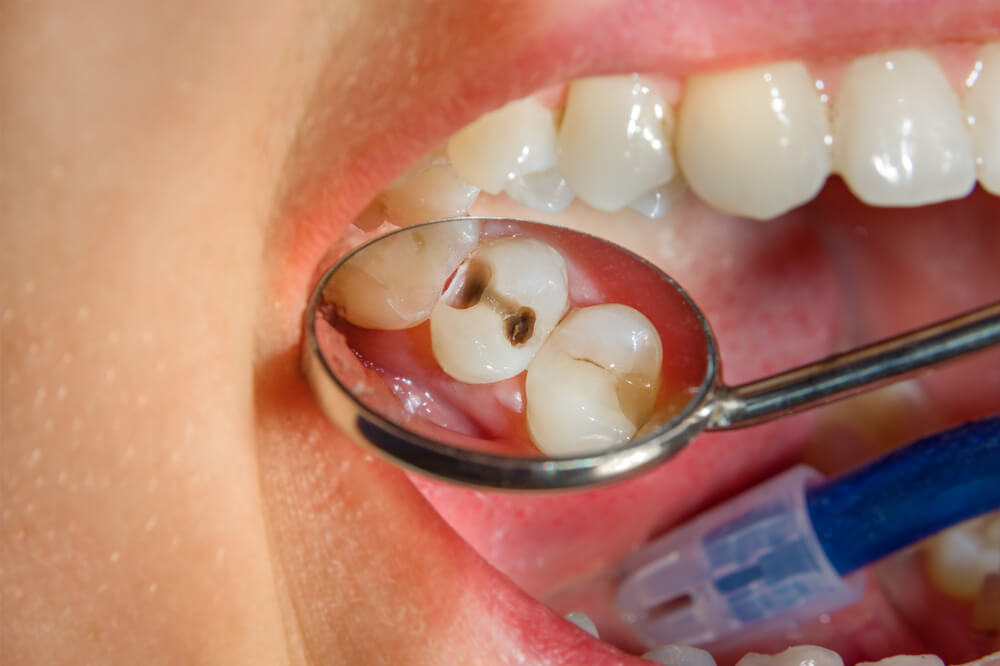
Tooth decay is the result of bacteria in the mouth producing acid that gradually breaks down the tooth’s enamel layer. Left untreated, decay progresses through the enamel into the softer dentin beneath, eventually reaching the inner pulp of the tooth where the nerve and blood supply are located. At that stage, a filling is no longer sufficient and root canal treatment or extraction may be needed.
Cavities caught in the early stages are straightforward to treat. At Ashland Family and Implant Dentistry, Dr. Ali Almaawi, DDS, FICOI uses digital X-rays and 3D CBCT imaging to detect decay as early as possible, often before you notice any symptoms. Treatment at this stage is quick, minimally invasive, and preserves as much of the natural tooth as possible. We serve patients from Ashland, Framingham, Natick, Hopkinton, Holliston, Southborough, and Milford.
How We Treat Cavities
For most cavities, treatment involves removing the decayed tooth material under local anesthesia and filling the space with tooth-colored composite resin. The resin is shaped and hardened to restore the tooth’s original contour, then polished. The result blends with the surrounding tooth and is indistinguishable from the natural surface.
For larger cavities where more of the tooth structure has been compromised, an inlay, onlay, or CEREC same-day crown may be recommended to provide sufficient strength and protection. Dr. Almaawi will explain what he finds and which option is clinically appropriate before any treatment begins.
Frequently Asked Questions
How do I know if I have a cavity?
Many cavities do not cause symptoms until they have progressed significantly. When symptoms do appear, they often include sensitivity to cold, sweet, or acidic foods, or a visible dark spot or hole in the tooth. The most reliable way to detect cavities early is through regular checkups and X-rays.
Do fillings hurt?
The procedure is performed under local anesthesia. Most patients experience no pain during treatment. Some mild sensitivity in the area is normal in the days following and typically resolves on its own.
How can I prevent cavities?
Brushing twice daily with fluoride toothpaste, flossing daily, limiting sugary and acidic foods and drinks, and attending regular checkups are the most effective preventive measures. Sealants on the back teeth provide additional protection, particularly for children.
If you suspect you have a cavity or have not had a checkup recently, call 508-881-7700 to schedule an appointment.