
Dental implants may be an appropriate tooth-replacement option for adults who are missing one or more teeth, have healthy oral tissues, and can support normal healing. However, implants are not automatically right for everyone. Your gum health, jawbone, medical history, medications, tobacco use, and ability to maintain the restoration all need to be evaluated before treatment begins.
At Ashland Family & Implant Dentistry, Dr. Ali Almaawi, DDS, FICOI examines your teeth, gums, bite, and available bone before recommending a treatment plan. Imaging may also be used when clinically appropriate to assess the implant site and determine whether preliminary care, such as an extraction, gum treatment, or bone grafting, may be needed.
To learn whether an implant-supported restoration may fit your needs, explore the practice’s implant dentistry options or call Ashland Family & Implant Dentistry at 508-881-7700 to request a consultation.
What Is a Dental Implant?
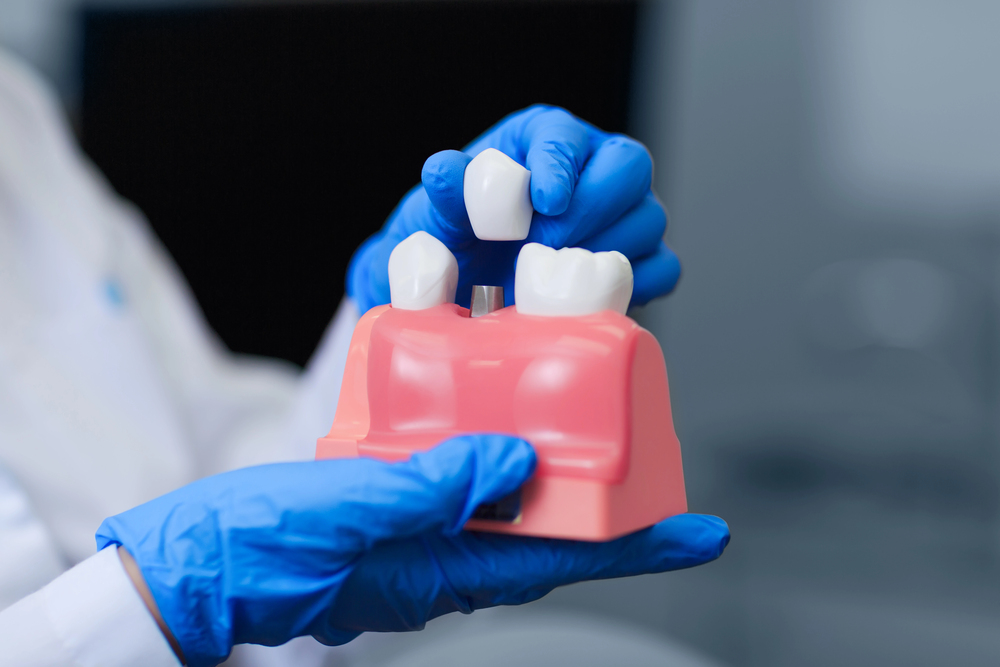
A dental implant is a small post placed in the jawbone to support a replacement tooth or dental prosthesis. The complete restoration usually includes three parts:
- Implant post: The component placed within the jawbone.
- Abutment: The connector between the implant and the visible restoration.
- Restoration: A crown, bridge, or implant-supported denture that replaces the missing tooth or teeth.
During healing, the surrounding bone may integrate with the implant surface through a process called osseointegration. This creates a stable foundation for the final restoration.
What Types of Tooth Loss Can Implants Address?
Implants can support several types of tooth-replacement treatment. The appropriate design depends on the number and location of missing teeth, the condition of the jawbone, and the health of the remaining teeth.
- One missing tooth: A single implant may support an individual crown.
- Several missing teeth: Multiple implants may support an implant-supported bridge.
- Many missing teeth: Implants may stabilize a removable or fixed full-arch restoration.
- Loose traditional dentures: Selected patients may benefit from implant-supported dentures for improved stability.
How Can You Tell Whether You May Be a Candidate?
Candidacy cannot be determined from age or tooth loss alone. A complete dental and medical evaluation is needed. Factors commonly considered include:
- One or more missing or non-restorable teeth
- Jaw growth that is complete
- Healthy gums or gum disease that has been treated
- Adequate bone or eligibility for bone grafting
- Medical conditions that are appropriately managed
- Realistic expectations about treatment and recovery
- Willingness to maintain brushing, interdental cleaning, and professional care
- Ability to complete a treatment process that may involve several stages
Older age alone does not automatically prevent implant treatment. Overall health, oral tissues, bone support, healing capacity, and the ability to maintain the restoration are generally more relevant considerations.
Who May Need Preliminary Treatment First?
Some patients need another dental procedure before an implant can be placed. This does not necessarily mean implant treatment is unavailable. It may simply change the sequence or length of the treatment plan.
- Active gum disease
- Untreated tooth decay or infection
- Insufficient jawbone at the planned implant site
- A damaged tooth that still requires extraction
- Bite problems that may overload the planned restoration
- Uncontrolled medical conditions that may interfere with healing
- Tobacco use that increases the risk of complications
Bone loss does not automatically disqualify a patient. Bone grafting or another preparatory procedure may be considered when additional support is needed.
The only reliable way to determine your next step is through an examination. Request an implant consultation with Ashland Family & Implant Dentistry, or call 508-881-7700 to speak with the team.
What Happens During the Dental Implant Process?
The exact process varies by patient, but treatment commonly includes the following stages.
Consultation and Treatment Planning
Dr. Almaawi reviews your dental concerns, treatment goals, medical history, medications, and previous dental care. Your teeth, gums, bite, and implant site are examined, and imaging may be recommended when necessary.
Preparatory Care
A damaged tooth may need to be removed before implant placement. Gum treatment, bone grafting, or another procedure may also be required to improve the health or support of the planned site.
Implant Placement
The implant post is placed in the planned position within the jawbone. Local anesthesia is used during the procedure, and available comfort options can be discussed during your consultation.
Healing and Osseointegration
The implant is given time to integrate with the surrounding bone. Healing time varies according to the treatment site, the need for grafting, the number of implants, overall health, and individual healing response.
Final Restoration
After the implant has healed sufficiently, an abutment and final crown, bridge, or denture can be attached. The restoration is designed according to your bite, appearance, and functional needs.
For a more detailed explanation of treatment timing, read why implant treatment may take several months.
What Are the Potential Benefits of Implant-Supported Tooth Replacement?
- Improved stability: Implants can provide a stable foundation for a crown, bridge, or denture.
- Chewing support: A well-planned restoration may help restore more comfortable chewing function.
- Natural appearance: The visible restoration can be designed to coordinate with the surrounding smile.
- Support without preparing adjacent teeth: A single implant may replace one missing tooth without using the neighboring teeth as bridge supports.
- Improved denture retention: Implants may reduce movement in selected removable denture designs.
- Bone support: Functional loading from an implant may help preserve bone around the implant site.
Results depend on diagnosis, implant position, restoration design, healing, bite forces, home care, and ongoing professional maintenance.
What Risks and Limitations Should You Understand?
Implant treatment has potential risks and is not guaranteed to succeed in every case. Your dentist should explain the risks that apply to your specific anatomy and health history.
- Infection at or around the implant site
- Failure of the implant to integrate with the bone
- Damage to nearby teeth, tissues, or other structures
- Nerve-related pain, numbness, or altered sensation in selected cases
- Sinus-related complications for some upper-jaw implant sites
- Inflammation or bone loss around an implant
- Chipping, loosening, or wear of the attached restoration
- Need for future repair, maintenance, or replacement of prosthetic components
Good planning, appropriate case selection, oral hygiene, tobacco avoidance, and regular dental care can help reduce some risks, but they cannot eliminate every possible complication.
How Do Implants Compare With Bridges and Dentures?
| Consideration | Dental Implant | Dental Bridge | Traditional Denture |
|---|---|---|---|
| Support | Supported by an implant in the jawbone | Commonly supported by adjacent teeth | Supported by gums and underlying tissues |
| Surgery | Usually requires a surgical procedure | Typically does not require implant surgery | Typically does not require implant surgery |
| Adjacent teeth | May avoid preparing neighboring teeth for a single-tooth replacement | Often requires preparation of supporting teeth | Does not rely on individual adjacent teeth |
| Treatment time | May require several months | Often completed in fewer stages | Varies according to extractions, healing, and design |
| Stability | Generally stable after integration | Fixed to supporting teeth | May move during speaking or chewing |
| Maintenance | Requires cleaning around the implant and restoration | Requires cleaning beneath and around the bridge | Requires daily removal and appliance cleaning |
No single option is best for every patient. Explore the practice’s restorative dentistry services, including dental bridges and traditional dentures, to understand the available alternatives.
How Long Does Implant Treatment Take?
The treatment timeline may range from several months to longer when extractions, bone grafting, multiple implants, or complex restorative planning are required. Some stages can be completed relatively quickly, but the implant usually needs adequate healing time before it supports the final restoration.
Your estimated schedule may depend on:
- Whether a tooth must be extracted
- Whether bone grafting is necessary
- The location and number of implants
- Your medical and oral health
- Your individual healing response
- The type of crown, bridge, denture, or full-arch restoration
How Long Can an Implant and Its Restoration Last?
The implant post and the visible restoration should be considered separately. The post is designed for long-term integration with the jawbone, but the crown, bridge, denture, abutment, screws, or other prosthetic components may require maintenance, repair, or replacement over time.
Long-term outcomes may be affected by gum health, plaque control, smoking, uncontrolled medical conditions, teeth grinding, bite forces, restoration design, and regular professional monitoring. Implants are therefore better described as a long-term tooth-replacement option rather than a maintenance-free or guaranteed permanent solution.
How Do You Care for a Dental Implant?
- Brush the restoration and surrounding gumline as directed.
- Clean between the implant and neighboring teeth with the recommended floss or interdental aid.
- Follow specific cleaning instructions for an implant bridge or implant-supported denture.
- Attend routine examinations and professional cleanings.
- Report bleeding, swelling, looseness, discomfort, or changes in your bite.
- Avoid tobacco products.
- Wear a protective appliance when recommended for grinding or clenching.
An implant cannot develop a cavity, but the surrounding gums and bone can still become inflamed or damaged. Consistent maintenance remains essential.
What Questions Should You Ask During Your Consultation?
- Am I currently a candidate for an implant?
- Do I have gum disease, infection, or bone loss that needs treatment first?
- Will I need an extraction or bone graft?
- Which implant-supported restoration fits my pattern of tooth loss?
- What imaging is needed?
- What risks apply to my case?
- How many treatment stages should I expect?
- Will I have a temporary tooth during healing?
- What is included in the treatment estimate?
- What maintenance will the implant and restoration require?
You can also review the practice’s guide to the questions to ask before beginning implant treatment.
Schedule a Tooth-Replacement Consultation in Ashland
Dental implants can provide stable, natural-looking support for a crown, bridge, or denture, but successful treatment begins with careful evaluation and realistic expectations. Dr. Ali Almaawi, DDS, FICOI can examine your oral health, review your medical history, assess the available bone, and explain whether implants or another tooth-replacement option may be appropriate.
Visit Ashland Family & Implant Dentistry at 37 Main Street in Ashland, Massachusetts. Call 508-881-7700 to request a dental implant consultation, contact the practice online, or view Ashland Family & Implant Dentistry on Google for directions and practice information.
Frequently Asked Questions About Implant-Supported Tooth Replacement
Are dental implants painful?
Local anesthesia is used during implant placement. Some soreness, swelling, or tenderness may occur afterward, but the amount and duration vary. Your dentist will provide instructions for managing recovery and explain available comfort options before treatment.
Am I too old for an implant?
Age alone does not determine candidacy. Oral health, bone support, medical history, healing capacity, medications, and the ability to maintain the restoration are more important considerations.
Can I receive an implant if I have bone loss?
Possibly. Bone grafting or another preparatory procedure may improve support in selected cases. Imaging and a clinical evaluation are needed to determine whether this approach is appropriate.
Can smokers receive implants?
Smoking does not automatically rule out every patient, but it can interfere with healing and increase the risk of implant complications or failure. Tobacco use should be discussed openly during the consultation.
Can someone with diabetes receive an implant?
Some patients with diabetes may be candidates when their condition is appropriately managed. The dentist may need to review current health information and coordinate with the patient’s medical provider.
Are implant-supported teeth removable?
Some implant restorations are fixed and can only be removed by a dental professional. Others, including certain implant-supported dentures, are designed to be removed by the patient for cleaning. The design depends on the treatment plan.
Does insurance cover implant treatment?
Coverage varies by plan and by treatment component. Some plans may contribute toward an extraction, implant, abutment, crown, bridge, denture, or preparatory procedure. Benefits should be verified before treatment begins.
What alternatives are available?
Alternatives may include a conventional dental bridge, partial denture, complete denture, or another restorative plan. The most appropriate option depends on the location of the missing teeth, remaining tooth support, bone, health, budget, and personal preferences.